¼ teaspoon red-pepper flakes, plus more for serving
Black pepper
Torn basil leaves, for serving (optional)
Finely grated Parmesan, for serving
Bring a large pot of salted water to a boil. Add the pasta and cook according to package instructions until al dente. Reserve 1 cup pasta cooking water, then drain the pasta.
Meanwhile, using the large holes of a box grater, grate the cut ends of the tomato into a large bowl. Discard or compost skins. Grate the butter into the bowl as well. Using the small holes of the box grater, grate the garlic into the bowl. Add the red-pepper flakes, and season generously with salt. Refrigerate until ready to use.
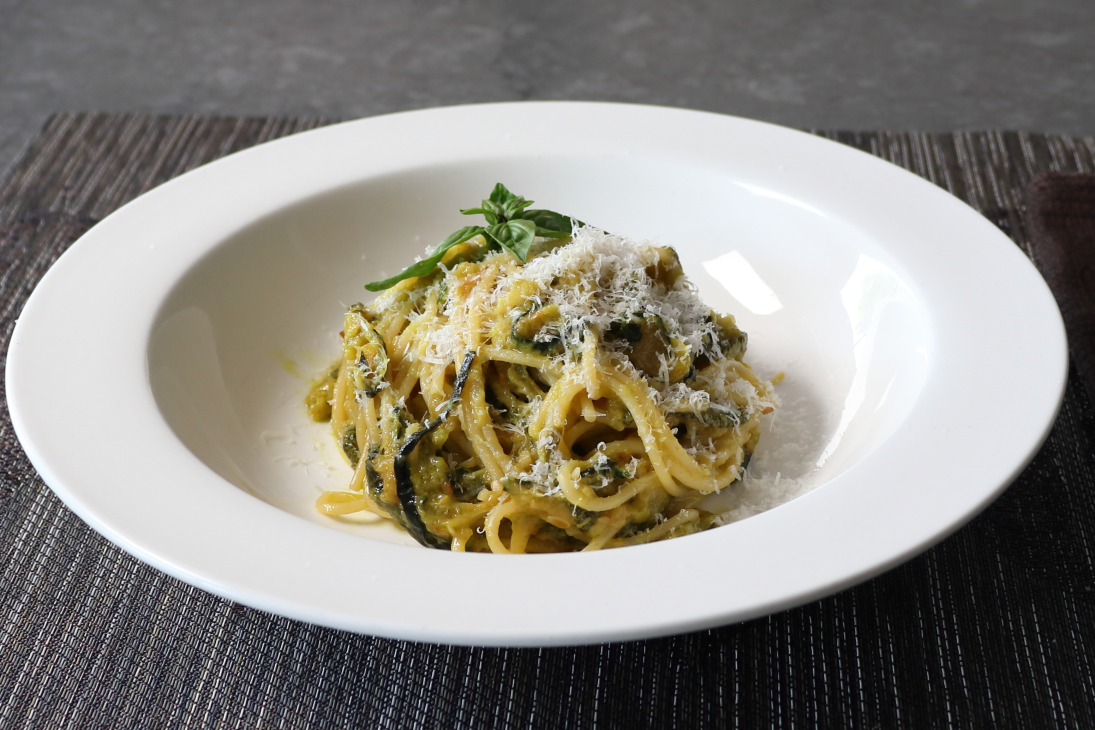
Return the drained pasta to the pot, along with the bowl of grated tomato and butter. Set over medium-high heat and cook, stirring constantly, until the mixture thickens slightly and glosses the pasta, 2 to 3 minutes (the sauce will thicken as it sits). Add pasta water as needed to emulsify the sauce. Season to taste with salt and pepper. Serve with more red-pepper flakes, black pepper, basil and Parmesan as desired.
1/2 cup (45 grams) grated gruyere, comte, or gouda cheese
1/4 cup (30 grams) grated parmesan or pecorino cheese
1 garlic clove, minced
Red pepper flakes or freshly ground black pepper
1 tablespoon (15 ml) olive oil
Finely grated zest of 1 lemon
1 large egg or egg yolk (optional, for shine)
Make the crust: Combine the flour and salt in a large bowl. Sprinkle butter over dough and using a pastry blender or your fingertips, work it into the flour until the mixture resembles small peas. Sprinkle sour cream and 3 tablespoons of water over the mixture and stir/mash it together to combine; it should form large clumps; add last tablespoon water if it does not. Use your hands to bring it together into a single mass. Transfer dough to a large square of parchment paper, patting it into a flatter packet, and wrap it tightly. Chilling it in the fridge until firm, 1 to 2 hours or up to 4 days. You can hasten the firming process along in the freezer, for about 20 minutes.
Make the filling: Hold the asparagus by the tough end (no need to snap it off) and cut the tips into 1-inch segments and the rest of the spears into very thin slices on a sharp angle. In a large bowl, toss with 1 teaspoon kosher salt and set aside for 30 minutes.
In a small bowl, combine ricotta, gruyere, parmesan, garlic, a pinch of salt, and pepper to taste and set aside.
Drain asparagus in a colander and pat it dry on paper towels. Return it to the empty bowl and toss with olive oil, lemon zest, and pepper to taste. (No need to salt because it will be well-seasoned from the salting step.)
Assemble galette: Heat oven to 400°F. Unwrap firm crust dough and line a large baking sheet with the parchment paper that it was wrapped in. On a floured counter, roll the dough out into a large round-ish shape, about 14 inches across. Gently transfer it to the parchment paper in the pan. Spread ricotta mixture over center, leaving a 3-inch border bare. Spoon asparagus over ricotta layer. Fold the border over the filling, pleating the edge to make it fit. The center will be open.
For a darker, glossier crust, beat an egg or just a yolk with 1 teaspoon of water and brush it over the crust.
Bake galette: For 30 to 35 minutes, until the crust is deeply golden. Serve warm, in wedges.
Do ahead: This galette keeps in the fridge for up to one week. It’s good at room temperature but even better warm, so the cheese is all stretchy again.
2 pints (20 ounces) cherry tomatoes 1/2 cup extra virgin olive oil Kosher salt and freshly ground black pepper One 8-ounce block feta cheese, drained 10 ounces mezze rigatoni 1 garlic clove, finely grated 1/4 cup fresh basil leaves, thinly sliced Flaky sea salt, for servin lg pinch of thyme
Preheat the oven to 400 degrees F.
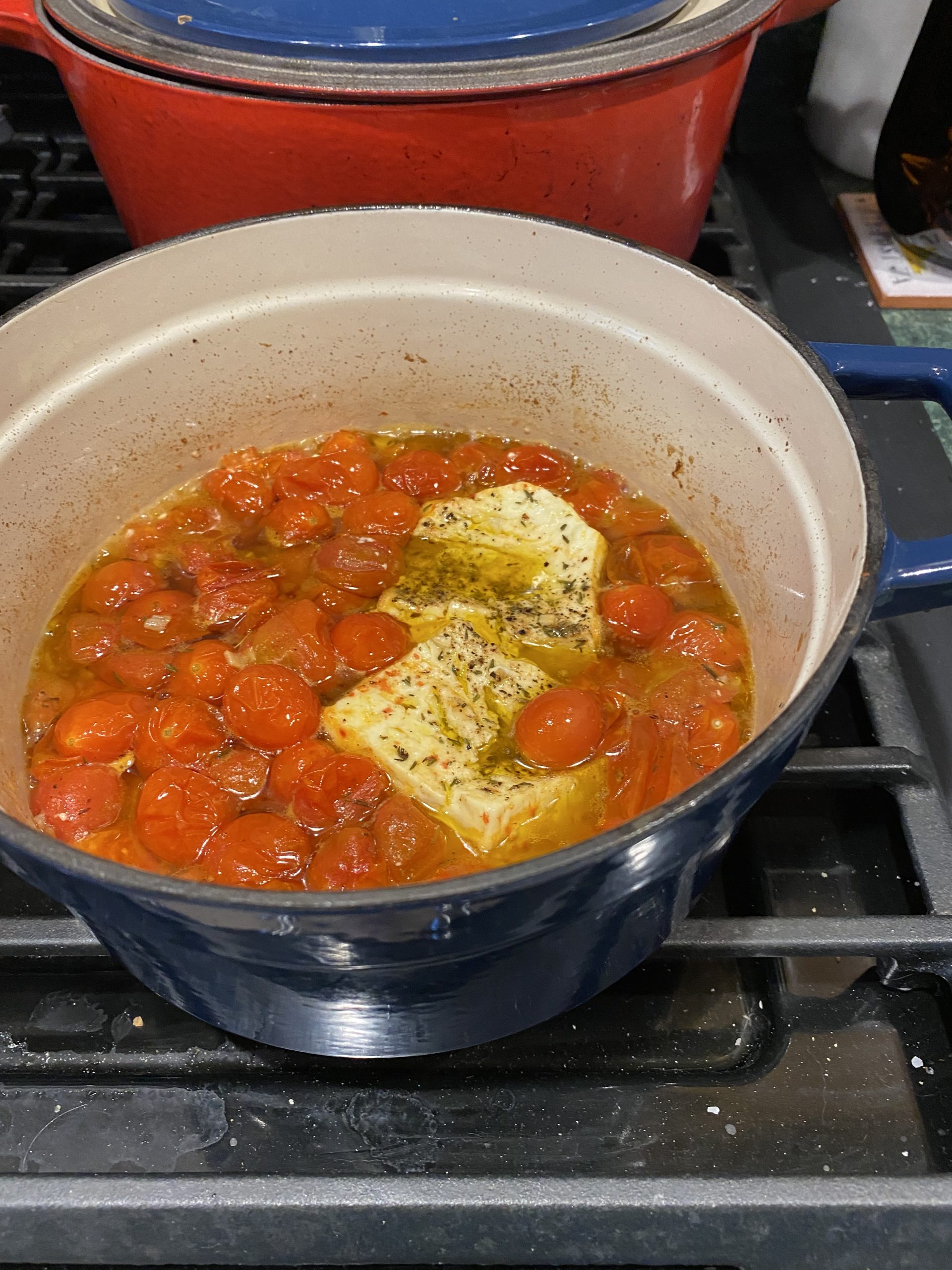
Toss the cherry tomatoes and olive oil with 1/4 teaspoon of salt and several grinds of black pepper in a medium bowl until combined. Pour into a 2 1/2 to 3-quart baking dish. Place the feta in the center of the tomatoes, then season with a pinch of black pepper, lg pinch of thyme and bury garlic under tomatoes. Bake until the tomatoes have burst and the feta has softened, about 30 minutes. Increase the heat to 425 degrees F, then continue to cook until the tomatoes and feta are golden brown, 10 to 15 minutes more.
Meanwhile, bring a large pot of generously salted water to a boil over high heat. Add the pasta and cook until al dente, about 13 minutes. Reserve 1/2 cup of cooking water, then drain well.
Right as the tomatoes and feta come out of the oven, stir in the garlic. Use the back of a spoon to smash the tomatoes and feta into a smooth and creamy sauce (it’s OK if some of the oil isn’t fully integrated and combined). Toss in the pasta and half of the basil until evenly coated. Add some pasta water, a couple tablespoons at a time, if the sauce becomes too thick. Taste and adjust the seasoning with salt and pepper. Top with the remaining basil and a pinch of flaky sea salt for serving.
Note: since I used a dutch oven my tomatoes did not brown as they were not spread out. Added thyme too.
12 oz. mixed mushrooms (such as maitake, oyster, shiitake, and/or crimini), trimmed, torn into 1″ pieces
1½ tsp. tsp. kosher salt, plus more
2 Tbsp. thyme leaves
1 large shallot, finely chopped
3 garlic cloves, finely grated
2 Tbsp. all-purpose flour
2¾ cups whole milk
Freshly ground black pepper
1 lemon
⅓ cup crème fraîche or thinned sour cream
8 oz. regular lasagna noodles, broken in half
4 oz. mozzarella, thinly sliced
Finely grated Parmesan (for serving)
Heat 3 Tbsp. oil in a large high-sided ovenproof skillet or small Dutch oven over medium-high. Add mushrooms and cook, undisturbed, until starting to brown, about 4 minutes. Season with salt and cook, tossing occasionally, until golden brown, 5–7 minutes. Transfer to a bowl; mix in thyme.
Reduce heat to medium-low. Heat remaining 2 Tbsp. oil in skillet. Add shallot and garlic and cook, stirring, until starting to soften, about 1 minute. Sprinkle flour over and cook, stirring, until golden, about 1 minute.
Add milk, pepper, 1½ tsp. salt, and 1¾ cups water, then finely grate zest of ¼ lemon into pan. Stir to dissolve flour, increase heat to medium, and cook until gently bubbling. Reduce heat to low, whisk in crème fraîche, and stir to combine. Add about one third of noodles, pushing down into sauce to submerge, followed by a third of mushrooms. Repeat with half of remaining noodles and mushrooms. Top with another layer of noodles. Set remaining mushrooms aside. Cover with a lid or foil and cook 15 minutes. (If lasagna threatens to boil over, use very lowest heat and/or prop open the cover.) Uncover; cook, gently lifting and separating noodles occasionally with tongs or a spatula to let sauce flow around, until sauce is thickened and noodles are cooked through, 6–8 minutes. Mixture should be bubbling gently; adjust heat as necessary. Remove from heat.
Heat broiler. Top lasagna with mozzarella and reserved mushrooms. Broil until cheese is bubbling and browned in spots, about 2 minutes. Finely grate more lemon zest over. Sprinkle with Parmesan; season with pepper. Let sit 5–10 minutes. Cut lemon into wedges and serve with lasagna.
1.STEAK METHOD Food processor | Clean work surface | Large saucepan of salted water on a high heat | Large freezer bag | Sauté pan First make the steak | Add all the ingredients, apart from the water and oil, to the food processor and pulse to combine | Add the water and blitz, scraping down the sides as needed | Tip the mixture on to a clean work surface, knead for a minute or two then bring it together into a tight ball Roll the mixture into a rough oblong shape and cut into 4 even slices | Flatten each slice with your hand so they’re roughly 1cm thick and steak- shaped (you can also use a rolling pin here) | For a dryer texture press the steak as you would tofu – wrapping it in kitchen paper and placing a weight on top of it for 20 minutes, which will give a firmer texture Lower the steaks into the pan of boiling salted water and simmer for 25 minutes | Take the steaks out of the pan, drain and leave to cool for 5 minutes Put the ingredients for the marinade into a large freezer bag | Put the steaks in the bag and roll them around in the marinade so they are well coated | Leave to marinate for 20 minutes | While the steaks are marinating, make the Café de Paris Secret Sauce (see opposite)
When you’re ready to cook the steaks place a sauté pan over a medium-high heat | Add a splash of oil and let it get hot | Add the steaks and pour over any remaining marinade | Cook for 2–3 minutes on each side, basting the steaks with the oil in the pan as they cook | Remove when both sides are well browned, but the steak is still tender | Leave to rest for a couple of minutes before serving with chips and Secret Sauce poured over in true Café de Paris style
2.CAFÉ DE PARIS SECRET SAUCE METHOD Saucepan | Liquidiser Prep the ingredients | Peel and thinly slice the shallots | Peel and finely chop the garlic | Pick the tarragon leaves, discard the stems, then finely chop | Finely chop the capers Put the saucepan over a medium heat | Add 1 tablespoon of the olive oil| Add the garlic and shallots and cook for 4–5 minutes until soft, stirring occasionally | Add the vegetable stock and simmer for 3–4 minutes | Add all the remaining ingredients and bring to the boil, then simmer for 10 minutes until the sauce has reduced a little and become thicker Take the pan off the heat and set aside to cool to room temperature
Pour the sauce into the liquidiser and blend until smooth | Pour back into the pan and bring to a simmer | Stir through the remaining 1⁄2 tablespoon olive oil before serving
3 tomatoes, seeded and chopped 2 avocados, chopped 1 small onion, chopped ¼ cup chopped fresh cilantro 2 cloves garlic, minced 1 lime, juiced 2 tablespoons vegetable oil 8 eaches corn tortillas 1 (15 ounce) can black beans, drained and rinsed 1 cup cooked white rice 2 tablespoons chopped fresh cilantro 1 dash green pepper sauce (such as Tabasco®), or to taste
Step 1 Mix tomatoes, avocados, onion, 1/4 cup cilantro, and garlic together in a bowl. Drizzle lime juice over tomato mixture; toss to coat.
Step 2 Heat vegetable oil in a skillet over medium heat. Arrange tortillas, 2 at a time, in hot oil; cook until crisp, about 1 minute per side. Remove tortillas using tongs and repeat with remaining tortillas.
Step 3 Spoon 2 tablespoons black beans and 2 tablespoons cooked rice onto each crisp tortilla; top with tomato mixture. Garnish tacos using remaining 2 tablespoons cilantro and green pepper sauce.
1 Tbsp. gochugaru (coarse Korean red pepper powder) or 1½ tsp. crushed red pepper flakes
Kosher salt
4 scallions
1 2″ piece ginger, peeled, thinly sliced
2 Tbsp. tomato paste
8 dried shiitake mushrooms
1 4×3″ piece dried kombu
3 Tbsp. unsalted butter, cut into pieces
1 Tbsp. low-sodium soy sauce
4 baby bok choy (about 12 oz. total), quartered lengthwise
4 5-oz. packages fresh ramen noodles
Jammy eggs, toasted nori sheets, and/or cilantro (for serving; optional)
Fresh ramen noodles can be found at Asian markets and some grocery stores. We like Sun Noodle brand.
Cook garlic and ¼ cup oil in a medium pot over medium heat, stirring often, until garlic is beginning to turn golden, about 3 minutes. Stir in sesame seeds and cook, stirring occasionally, until garlic is golden brown and crisp, about 1 minute. Transfer mixture to a small bowl and stir in gochugaru; season with salt. Set garlic oil aside. Wipe out pot and set aside.
Trim dark green parts from scallions and thinly slice; set aside for serving. Coarsely chop white and pale green parts. Heat remaining 2 Tbsp oil in reserved pot over medium-high. Cook chopped scallions and ginger, stirring often, until scallions are charred in spots, about 4 minutes. Add tomato paste and cook, stirring occasionally, until it begins to stick to the bottom of pot and darkens slightly, about 2 minutes. Add mushrooms and kombu, then stir in 5 cups cold water. Bring to a boil, then remove from heat and let sit until mushrooms soften, about 10 minutes. Remove and discard kombu.
Using a slotted spoon, transfer solids to a blender. Add a ladleful or 2 of broth to blender and purée until smooth. Stir purée back into broth in pot and bring to a simmer over medium heat. Add butter a piece at a time, whisking to combine after each addition before adding more. Stir in soy sauce; season with salt. Reduce heat to low and keep warm until ready to serve.
Meanwhile, bring a large pot of water to a boil. Add bok choy and cook until bright green and tender, about 2 minutes. Using a slotted spoon, transfer bok choy to a plate. Return water to a boil and cook noodles according to package directions. Drain and divide among bowls.
To serve, ladle broth over noodles, then top with bok choy and reserved garlic oil. Top with eggs, nori, and cilantro if desired.
1 ½ teaspoons ground turmeric, plus more for serving
1 teaspoon red-pepper flakes, plus more for serving
2 (15-ounce) cans chickpeas, drained and rinsed
2 (15-ounce) cans full-fat coconut milk
2 cups vegetable stock
1 bunch Swiss chard, kale or collard greens, stems removed, torn into bite-size pieces
1 cup mint leaves, for serving
Yogurt, for serving (optional)
Toasted pita, lavash or other flatbread, for serving (optional)
Heat 1/4 cup oil in a large pot over medium. Add garlic, onion and ginger. Season with salt and pepper, and cook, stirring occasionally until onion is translucent and starts to brown a little at the edges, 3 to 5 minutes.
Add 1 1/2 teaspoons turmeric, 1 teaspoon red-pepper flakes, and the chickpeas, and season with salt and pepper. Cook, stirring frequently, so the chickpeas sizzle and fry a bit in the spices and oil, until they’ve started to break down and get a little browned and crisp, 8 to 10 minutes. Remove about a cup of chickpeas and set aside for garnish.
Using a wooden spoon or spatula, further crush the remaining chickpeas slightly to release their starchy insides. (This will help thicken the stew.) Add coconut milk and stock, and season with salt and pepper.
Bring to a simmer, scraping up any bits that have formed on the bottom of the pot. Cook, stirring occasionally, until stew has thickened, 30 to 35 minutes. (Taste a chickpea or two, not just the liquid, to make sure they have simmered long enough to be as delicious as possible.) If after 30 to 35 minutes, you want the stew a bit thicker, keep simmering until you’ve reached your desired consistency. Determining perfect stew thickness is a personal journey!
Add greens and stir, making sure they’re submerged in the liquid. Cook until they wilt and soften, 3 to 7 minutes, depending on what you’re using. (Swiss chard and spinach will wilt and soften much faster than kale or collard greens.) Season again with salt and pepper.
Divide among bowls and top with mint, reserved chickpeas, a sprinkle of red-pepper flakes and a good drizzle of olive oil. Serve alongside yogurt and toasted pita if using; dust the yogurt with turmeric if you’d like.
Heat the oven to 350°F and (optionally) line two large baking pans with foil.
Break the cauliflower into bite-sized florets and put into a large bowl. Pour 4 tablespoons of oil over the florets (or mix enough to coat them properly), then sprinkle with 1 teaspoon of salt. Mix with your hands until they’re completely coated, and place in a single layer in the baking pans. Roast for 30 to 40 minutes, until tender and nicely browned in places. Check every 10 minutes—if the florets start to burn, cover them loosely with foil.
In the meantime, put 3 tablespoons of oil into a large frying pan over medium heat and, when hot, add the onions. Cook for 12 to 15 minutes, until soft and browning, then crush or grate in the garlic and grate in the ginger. Fry for a couple of minutes, then add the ground cardamom, black pepper, garam masala, ground red chile, ground almonds, honey and 1 1/4 teaspoons of salt (or to taste). Stir-fry for 3 minutes, then add the yogurt.
Turn the heat down to low and cook for around 10 minutes, until the sauce starts to turn a rich gold. When the cauliflower is tender, tip it ino the sauce and stir to coat. Thin the sauce to the consistency of pouring yogurt with milk, and heat through. Check for seasoning, as you may need to add a little more salt.
Finally, put a small frying pan over medium heat and, when hot, add the raisins and sliced almonds. Stir-fry until the raisins start to blacken and puff up and the almonds turn golden brown, then take off the heat.