Mini Herbed Pommes Anna from epicurious.com

51123070

  • 1/2 cup (1 stick) unsalted butter
  • 12-24 small tender thyme sprigs plus 2 teaspoons coarsely chopped leaves
  • 1 garlic clove, minced
  • 1 3/4 pounds small waxy potatoes (such as Yukon Gold or German Butterball), each slightly larger than a golf ball
  • 2 teaspoons kosher salt
  • Freshly ground black pepper
  • Special equipment:A standard 12-cup muffin pan; a mandoline

Preheat oven to 350°F. Melt butter in a small saucepan over medium heat. Brush muffin cups all over with butter. Line bottoms with parchment-paper rounds. Arrange 1-2 small thyme sprigs in center of each round. Drizzle 1/2 teaspoon butter into bottom of each cup.

Add chopped thyme and garlic to remaining butter in saucepan. Stir over medium-low heat until fragrant, about 2 minutes. Remove from heat.

Using mandoline, slice potatoes crosswise into very thin rounds (less than 1/16″ thick), placing them in a large bowl as you work. Pour herb butter over and season with salt and pepper; toss to coat well.

Divide potato slices among muffin cups, layering overlapping slices to create a circular pattern. Lightly press center of each to make compact. Drizzle any remaining butter and seasoning from bowl over.

Cover muffin pan tightly with foil and place on a baking sheet. Bake until potatoes can be pierced easily with the tip of a knife, about 35 minutes. Remove foil; invert a rimmed baking sheet over pan. Turn, lightly tapping on counter, releasing potatoes onto sheet. Rearrange any slices that may have fallen out. Using a metal spatula, carefully turn cakes, thyme sprigs facing down. Discard parchment. DO AHEAD:Potatoes can be made 1 day ahead. Cover; chill.

Increase heat to 425°F. Uncover cakes if needed. Bake until bottoms and edges are golden and crispy, 25-30 minutes. Carefully turn cakes, thyme sprigs facing up. probably not necessary to turn them


Cauliflower Patties from food52

  • cauliflower1 large cauliflower (washed & trimmed into bite size pieces)
  • 3 to 4 shallots, peeled and chopped
  • 2 to 3 small garlic cloves (peeled and finely chopped)
  • 3 to 4 large organic eggs
  • Fresh italian flat leaf parsley
  • 1/2 cup to 3/4 cup grated Romano cheese
  • 1/2 cup shredded low moisture mozzarella
  • 1/4 to 1/2 cup (or more if needed) unbleached baking flour
  • 1/4 to 1/2 cup (or more if needed) whole milk
  • Salt and pepper to taste
  • Light olive oil (for cooking
  • Place a large stockpot filled with water to boil on the stove top. Once it comes to a full boil, add the prepared cauliflower and cook until tender, but not too mushy. Drain and rinse with cold water, set aside to cool.
  • Saute the shallots and garlic in olive oil until soft and fragrant; do not brown. Remove from heat and set aside.
  • Break the cooked cauliflower pieces down into very small pieces using your hands or a knife. The cauliflower needs to be solid enough to taste and create texture, but not so large as to not allow the patties to cook properly.
  • Add the eggs, cooked shallots and garlic to the bowl of cauliflower and season with salt and pepper to taste. Mix this well and add some flour and milk to begin creating a batter-like consistency (start with 1/4 cup of each and add more as needed; adjust to get the desired consistency.)
  • Add the grated cheese, shredded mozzarella and chopped fresh parsley to the mix and blend well until combined. Again, test the thickness here and adjust accordingly adding flour and milk until you are satisfied.
  • NOTE: The mixture for these patties is a bit of trial and error as it needs to resemble a very thick pancake batter without being too dry or worse, too thin and runny.
  • Heat a large non-stick skillet to medium-high heat and add drizzle of the light olive oil and test the mixture by spooning a small pattie into the skillet and watch how it cooks and holds its shape.
  • Use your spatula to press and form the pattie in the skillet as it cooks to make sure it maintains shape and cooks through. Adjust your heat and resist the urge to flip too soon, allow the pattie to cook until light golden brown (about 3-4 minutes each side depending on your stove) before you flip them.
  • Continue forming and cooking the patties, adding more light olive oil as you go. Remove the cooked patties to a large flat platter to cool (do not overlap them until cooled.) Taste the first patties and adjust your salt and pepper seasoning for the remaining batter, if needed.
  • I love to serve these after letting them cool as they are much more flavorful at room temperature. These are the ideal hostess side dish (plan to make these during the upcoming holidays) that you can make ahead.
  • Store them in a sealed container in the refrigerator and simply deliver them to your host and let them come back to room temperature before serving.  Serves about 4 to 6


Rhonda’s Spaghetti with Fried Eggs and Pangritata for One from food52

PangritFood52ata

  • 2 tablespoons olive oil
  • 1/3 cup fresh or stale coarse breadcrumbs
  • 2 teaspoons minced fresh rosemary leaves
  • zest from half a lemon
  1. Heat 2 tablespoons olive oil in a large skillet over medium-high heat.
  2. Add the breadcrumbs and sauté until golden and crispy, about 4 to 5 minutes.
  3. Add the rosemary, immediately remove from heat and allow to cool.
  4. Mix in lemon zest and set aside.

Spaghetti and Eggs

  • 4 ounces spaghetti
  • 1 tablespoon olive oil
  • 1 tablespoon unsalted butter
  • 2 cloves garlic, minced
  • 2 large eggs
  • 2 tablespoons chopped Italian parsley
  • 1 teaspoon small capers, drained
  • freshly ground black pepper, to taste
  • 1/4 cup grated Pecorino Romano cheese
  1. Bring a large pot of well-salted water to a boil and cook pasta to al dente according to directions on box. (I usually undercook the pasta by about a minute.)
  2. Wipe out the skillet from the pangritata, add 1 T olive oil and 1 T butter and melt together over medium heat.
  3. Add the garlic and immediately break the eggs into the skillet.
  4. If need be, lower the heat a bit. You want the garlic to cook without burning and the egg whites to set, but the yolks to remain runny.
  5. Drain the pasta well, reserving ½ c of the cooking liquid.
  6. Add pasta back to the pot, pour over the eggs and all the fat from the skillet, add the parsley and capers and toss well, breaking up the eggs as you do. If you prefer a wetter dish, you can add in some of the reserved cooking liquid.
  7. Plate the pasta and eggs, season well with freshly ground black pepper, sprinkle with the grated cheese and then top with the pangritata.
  8. Pour yourself a glass of wine and enjoy!


Crispy Baked Pasta with Mushrooms, Sausage, and Parmesan Cream Sauce

from serious eats

    • 1 cup Panko-style 20140930-past-mushroom-sausage-cast-iron-baked-41bread crumbs
    • 6 ounces grated Parmesan cheese
    • 1/4 cup chopped fresh parsley leaves
    • 2 tablespoons finely minced fresh chives
    • 2 small shallots, finely minced (about 1/2 cup)
    • 2 medium cloves garlic, minced (about 2 teaspoons)
    • 2 tablespoons extra-virgin olive oil
    • Kosher salt and freshly ground black pepper
    • 2 tablespoons unsalted butter
    • 8 ounces veggie sausage (mild or hot), removed from casings
    • 1 pound mixed mushrooms (such as portobello, shiitake, and oyster), cleaned and thinly sliced
    • 1 tablespoon soy sauce
    • 1 tablespoon juice from 1 lemon
    • 2 1/2 tablespoons all-purpose flour
    • 2 cups homemade or store-bought veggie stock
    • 1 cup heavy cream
    • 12 ounces fresh or 8 ounces dried ridged pasta such as rotini or campanelle

Bring a large pot of salted water to a boil and keep at a bare simmer. Combine bread crumbs, 2 ounces cheese, half of parsley, half of chives, 1/4 of shallots, and 1/4 of garlic in a medium bowl and massage with hands until combined. Season to taste with salt and pepper

Melt butter in a large cast iron skillet over medium-high heat until foaming. Add sausage and cook, mashing it with a potato masher or a wooden spoon until broken up and well browned, about 7 minutes. Use a slotted spoon to transfer sausage to a small bowl, leaving fat behind.

Increase heat to high, add mushrooms to skillet, and cook, stirring frequently, until moisture has evaporated and mushrooms are well-browned, about 10 minutes. Add shallots and garlic and cook, stirring, until fragrant, about 30 seconds. Add soy sauce and lemon juice and stir to combine.

Add flour and cook, stirring, until a thin film begins to form on the bottom of the pan, about 1 minute. Slowly whisk in chicken broth followed by heavy cream. Bring to a simmer and cook until thickened, about 2 minutes. Stir in remaining grated cheese until melted. Stir in remaining parsley and chives. Stir in sausage. Season to taste with salt and lots of black pepper.

Adjust rack to 10 inches below broiler element and preheat broiler to high. Cook pasta in salted water according to package directions, removing it when still just shy of al dente. Drain, reserving 1 cup of cooking liquid. Return to pot. Add mushroom mixture and stir to combine, adding liquid to adjust consistency. Pasta should be very loose but not soupy. Return to cast iron skillet and top with bread crumbs. Broil until golden brown, rotating pan as necessary, 2 to 3 minutes. Serve immediately.

Farro with Tuna and Tomatoes from Lidia

farro_with_tuna_and_tomatoes_985_f 1 pound farro
2 bay leaves, preferably fresh
1 tablespoon Coarse sea salt, or kosher salt
10 tablespoons extra-virgin olive oil, or more
6 plump garlic cloves
½ teaspoon peperoncino, (crushed red pepper flakes)
3 cup canned Italian plum tomatoes, preferably San Marzano, crushed by hand
12 ounces canned tuna in olive oil, (preferably imported from Italy)
4 tablespoons small capers, drained
2 tablespoons fresh Italian parsley, chopped

Rinse the farro well and drain in a sieve. Put it in the pot with 6 cups of water, the bay leaves, 1/2 teaspoon salt and 2 tablespoons olive oil. Bring to the boil, stirring occasionally, set the cover slightly ajar, and adjust the heat to maintain a steady bubbling simmer. Cook about half an hour, stirring from time to time, until the farro grains are cooked through but still al dente, then turn off the heat. Most of the liquid should have been absorbed; if there’s water still visible, pour it off. Discard the bay leaves. Keep the farro in the covered pot to stay warm while you make the sauce.

Pour 1/3 cup of the olive oil into the big skillet and set over medium-high heat. Scatter in the sliced garlic and peperoncino in the pan and cook for a couple of minutes to caramelize. Stir in the crushed tomatoes, 2 teaspoons salt and the capers and heat to a moderate boil and let the tomatoes bubble away, uncovered.

Meanwhile, drain the canned tuna and break it up into thick flakes, 1/2-inch or a bit larger. After the tomatoes have cooked about 5 minutes, drop the tuna in the skillet and stir it into the tomatoes slowly, so the flakes of fish stay together. Cook at the same bubbling boil for another 5 minutes, until the tomatoes are cooked and slightly reduced.

Lower the heat a bit and stir in the remaining olive oil (about 3 tablespoons). Now spill the cooked farro on top of the sauce and toss and stir, still over moderate heat, until the grains are very hot and thoroughly mixed with the tomatoes and tuna. Turn off the heat, toss in the chopped parsley and serve.  serves: 6

Basil Buttermilk Ranch Dressing from food52.com


  •  2 tablespoons minced shallotOBradyRanch2
  • 2 tablespoons chopped basil
  • 2 tablespoons chopped chives
  • 1 tablespoon chopped parsley
  • 1 small clove garlic, minced
  • 2 teaspoons teaspoons lemon juice or white wine vinegar
  • 1/2 cup mayonnaise
  • 2 tablespoons yogurt or sour cream
  • 1 cup well-shaken buttermilk
  • Salt and freshly ground black pepper
  • 1/4 teaspoon smoked paprika, optional
  • Honey, as needed
  1. In a jar with a tight fitting lid, combine the shallot, herbs, garlic, vinegar or lemon juice, mayonnaise, and yogurt or sour cream. Screw on the the lid and shake the jar to combine. Stir in most of the buttermilk. Check for consistency, and add more if needed. Taste, then season with salt, pepper and paprika. If the dressing is too sharp, drizzle in some honey to mellow the acidity. Taste again, and adjust if needed.
  2. Cover and refrigerate for an hour before using, to allow the flavours to blend and develop.
  3. Makes about 2 cups 


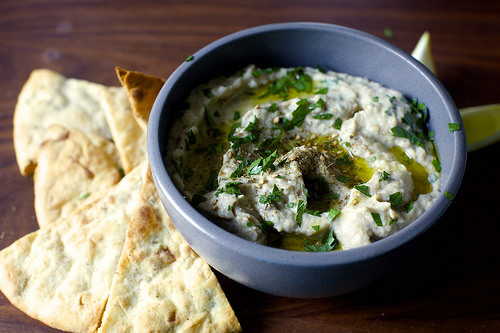
Smoky Eggplant Dip [Moutabbal] from smittenkitchen.com

14783013698_9bc2dd5b2f

2 medium eggplants (about 1 pound each)
2 tablespoons olive oil, divided
1 teaspoon coarse or kosher salt, or to taste
6 tablespoons tahini (sesame seed paste), well-stirred if a new container
2 garlic cloves, peeled and minced or pressed
Juice of 1 lemon, plus more to taste, if desired
Pinch of cayenne or aleppo pepper
Pinch or two of ground cumin
2 tablespoons well-chopped flat-leaf parsley, divided
Toasted sesame seeds or za’atar for garnish

Heat oven to 375°F. Brush a baking sheet or roasting pan with 1 tablespoon olive oil, and sprinkle with 1 teaspoon salt. Prick eggplants a few times with a fork or tip of a knife. Over a gas flame, grill or under a broiler, evenly char the skin of your eggplants. I like mine quite smoky and like to leave no purple visible. Transfer to a cutting board, and when cool enough to handle, trim off stem and cut lengthwise. Place cut side down on prepared baking sheet and roast for 30 to 35 minutes, until very, very tender when pressed. Let cool to room temperature.

In a blender or food processor: Scrape eggplant flesh from skin and into the work bowl. Add tahini, lemon, cayenne, cumin and 1 tablespoon parsley. Blend in short bursts (pulses) until combined but still coarsely chopped.

By hand: Scrape eggplant flesh from skin and onto a cutting board. Finely chop the eggplant, leaving some bits closer to pea-sized. In a bowl, whisk together tahini, garlic, lemon, cayenne, cumin and half the parsley. Add chopped eggplant and stir to combine.

Both methods: Taste and adjust ingredients if needed. I usually need more salt and lemon.

To serve: Spoon into a bowl and drizzle with remaining tablespoon of olive oil. Scatter with second tablespoon of parsley, and some toasted sesame seeds or za’atar, if desired. Serve with pita wedges.

For a big delicious summer meal, you could serve this with a tomato-cucumber salad,ethereally smooth hummus and pita wedges. If you’d like to be fancy, grilled or pan-roasted lamb chops are wonderful here too. (I use this method, but just season them with salt, pepper, lemon zest and dried oregano these days. I finish them with a squeeze of lemon juice.)  Makes about 2 cups

Tomato Crostini with Whipped Feta Ina Garten

10612586_963242350368033_3523602215337288934_n

6 ounces good feta, crumbled
2 ounces cream cheese, at room temperature
2/3 cup good olive oil, divided
2 tablespoons freshly squeezed lemon juice
Kosher salt and freshly ground black pepper
2 tablespoons minced shallots (2 shallots)
2 teaspoons minced garlic (2 cloves)
2 tablespoons good red wine vinegar
2 pounds ripe heirloom or cherry tomatoes, 1/2-inch-diced

For the whipped feta, place the feta and cream cheese in the bowl of a food processor fitted with the steel blade. Pulse until the cheeses are mixed. Add 1/3 cup of the olive oil, the lemon juice, 1/2 teaspoon salt, and 1/4 teaspoon pepper and process until smooth.

For the tomatoes, up to an hour before your’re serving, combine the shallots, garlic, and vinegar in a medium bowl. Set aside for 5 minutes. Whisk in the remaining 1/3 cup olive oil, 1 teaspoon salt, and 1/2 teaspoon pepper. Add the tomatoes, stir gently, and set aside for 10 minutes. Stir in the basil and taste for seasonings.

To assemble the crostini, spread each slice of bread with a generous amount of whipped feta. With a slotted spoon, place the tomatoes on top. Put the crostini on plates and scatter with the pine nuts. Sprinkle with extra basil and serve.   (Serves 6 to 8)

Cold Noodles with Miso, Lime and Ginger from http://smittenkitchen.com/

Adapted, just a bit, from David Tanis

cold soup


Noodles and vegetables
8 ounces buckwheat noodles
A mixture of raw vegetables of your choice (such as carrots, cucumbers, radishes or daikon; see Note for more suggestions)


Sauce
2 to 3 tablespoons miso (red is recommend; white would be just fine)
1 2-inch piece ginger, finely grated
2 teaspoons granulated sugar
1/8 teaspoon ground cayenne, or to taste
2 tablespoons mirin
1 tablespoon soy sauce
2 tablespoons lime juice (from about 1 lime), plus lime wedges for serving

 Cook the noodles in well-salted water until tender but firm for the time recommended on your package of noodles. What, your package is only in Japanese, like mine? Most are cooked between 5 and 8 minutes, so test at 5 and add more minutes if needed.

Meanwhile, grate, julienne or thinly slice vegetables of your choice.

Drain noodles and run cold water over them to cool. Drain again, shaking out excess water.

Make the dressing by whisking the smaller amount of miso plus the remaining sauce ingredients in a bowl. Taste and adjust to make sweeter (with more sugar) or more intense and salty (with the last tablespoon of miso) if desired.

Divide noodles among four bowls; toss each with a tablespoon of the sauce, plus more to taste. Top with vegetables and extra droplets of sauce. Serve with lime wedges.

Notes:

  • Mirin is a rice wine, similar to sake but lower in alcohol and much more sweet. If you can’t find it or don’t wish to buy it (a bottle of the basic stuff is usually around or just under $5), you might try using sake, or a mixture of rice vinegar, sugar and white wine or just water, I’d say 1 tablespoon of each liquid plus 1/2 teaspoon sugar to replace the 2 tablespoons of mirin recommended below.
  • If you have access to an Asian grocery store (New Yorkers, I use the M2M shops often), see if you can find 100 percent buckwheat soba noodles (which would also be gluten-free); they’re inexpensive and wonderful here. Mine had a mix of buckwheat and wheat flour, which is more common. If you cannot find them, you can use rice noodles or even spaghetti in a pinch. Here’s a good read on different Asian noodles.
  • Use whichever medley of cold, crunchy vegetables you’d like here; Tanis recommends daikon (a long, white mild radish), cucumber, radishes, radish sprouts and shiso leaves; I cleaned out my produce drawer with some julienned carrots, thinly sliced string beans, radishes, cucumbers and some wasabi micro-greens I couldn’t resist at the Greenmarket. Tanis suggests soaking grated daikon in the sauce, which I have no doubt mellows it, but I wanted to keep things simpler here.
  • I should forewarn that 3 tablespoons of red miso (a saltier, more intenseversion of white miso; you can use white miso here too if you don’t have red) will make a very salty sauce. We liked it, but we also used just a little per bowl. You can use the full amount and go easy on the sauce as we did, bump up the sugar, or you can start with less of the miso and only add more to taste. I’m recommending the latter above.
  • Serves 4 as a light meal or appetizer; for bigger appetites, you might want to double this


Marinated Seared Tuna from Anne Burell


LR0802H_marinated-seared-tuna_s4x3.jpg.rend.sni12col.landscape

1/2 cup soy sauce
1/4 to 1/2 cup rice wine vinegar

2 teaspoons sambal oelek
4 scallions, white and light green sliced and finely chopped, dark green sliced on an extreme bias for garnish
2 cloves garlic, smashed and finely chopped
1 1/2 inches ginger, peeled and grated
Four 6-ounce sushi-grade tuna steaks, preferably in logs about 2 by 2 by 4 inches
Peanut oil, for searing

In a flat, shallow dish, combine the soy, rice vinegar, sambal, white and light green scallions, garlic and ginger. Add the tuna and roll around to get the marinade on all sides. Cover and let sit in the fridge for up to 2 hours, turning the tuna periodically.

Remove the tuna from the fridge and let sit in the marinade outside of the fridge for 20 to 30 minutes.

When the tuna has come to room temperature, remove it from the marinade. With a paper towel, gently remove some of the excess marinade.

Coat a large saute pan with peanut oil and bring it to a VERY high heat. When the pan is VERY hot but not quite smoking, pull the pan off the heat and add the tuna to the pan. Return the pan to the heat and sear the tuna for 1 minute on each side.

Remove the tuna from the pan, let rest for 4 to 5 minutes and slice into 1/4 to 1/2-inch thick slices. Sprinkle with the dark green sliced scallion tops.

Serve immediately with a little extra soy on the side if desired.