Red Raspberry Spinach Salad, Phyllis Keating

Red-Raspberry-Spinach-Salad-recipe-Taste-and-Tell
Dressing
1/2 cup raspberry jam
1/2 cup seasoned rice vinegar
2 tablespoons vegetable oil

Salad
5 oz baby spinach, chopped
1 romaine heart, chopped
1 cup red grapes, halved
1/2 cup dried cranberries
1 pear, sliced
4 oz fresh raspberries
2.5 oz crumbled blue cheese
1/4 cup shelled pistachios, chopped
Instructions

Make the Dressing:
Combine the jam and the vinegar in a blender and pulse until combined. With the blender running, stream in the vegetable oil. Alternately, combine all ingredients in a jar with a tight fitting lid and shake until completely combined.

Make the Salad:
Combine the spinach, romaine, grapes, cranberries, pear and raspberries in a large bowl and toss to combine. Sprinkle the blue cheese and pistachios on top. Serve with the raspberry vinaigrette.

Orzo salad, Phyllis Keating

Makes 1 quart

1/2 cup hazelnuts
1/2 cup red wine vinegar
1/2cup golden raisins
1cup orzo
1lime, juiced
2tablespoons rice wine vinegar
2tablespoons champagne vinegar
Kosher salt
1/4cup sesame oil
2 tablespoons good olive oil, plus more for coating the orzo
6 scallions
Small handful of chives
1/4 teaspoon red pepper flakes
2 ounces fresh goat cheese
1/4 teaspoon flaky sea salt

Heat the oven to 350° F. Scatter the hazelnuts across a baking sheet, then put in the oven for 10 minutes. Take them out and allow them to cool, then remove the skins. Leave the nuts whole, or roughly chop them — however you prefer. Set aside.

Bring the red wine vinegar and 1/2 cup of water to a healthy simmer. Add the raisins and turn down the heat to low. Cover, then cook for 10 minutes. Turn off the heat and allow the raisins to sit in the vinegar solution for an additional 20 minutes. Drain the raisins and set them aside.Bring a pot of water to a rolling boil, then add enough kosher salt to make the water taste like the sea. Add the orzo to the pot and cook until al dente (for me, this was consistently 2 minutes less than the bag recommended). Drain the orzo, transfer to a bowl, and stir in a bit of olive oil — just enough so that the pasta doesn’t stick.

Allow the orzo to cool for 20 to 30 minutes.Make the dressing: Add the lime juice, rice wine vinegar, and champagne vinegar to a small bowl. Whisk in a little pinch of kosher salt. Add the sesame oil and 2 tablespoons of olive oil. Whisk the dressing to emulsify the oil, then set aside.Clean and thinly slice the whites and light greens of the scallions. Mince the chives.Stir the red pepper flakes into the orzo. Add the hazelnuts, raisins, scallions, and chives. Fold in the dressing. Stir in the sea salt. Using a fork, break up the goat cheese, then crumble it into the bowl and lightly fold to combine. Serve chilled or at room temperature. Author’s Note: If you are eating the salad fresh, I think 1/2 cup of dressing is sufficient. I usually save the remaining 1/4 cup for just before serving, especially if I make the salad ahead of time. But add the dressing bit by bit, then stop when it tastes right to you.

How to Ferment Cabbage and Make Sauerkraut

http://toriavey.com/toris-kitchen/2013/06/how-to-ferment-cabbage-and-make-sauerkraut/
Fermentation crock
Cabbage – amount varies based on your needs (we used 2 large heads)
Large mixing bowl
Kosher salt
Kitchen scale
2 fermentation weights
Medium saucepan

Start by boiling 6 cups of water with 1 tbsp of kosher salt till salt is dissolved. Allow to cool.

Meanwhile, clean your cabbage and pull off 5-6 of the external whole leaves, set aside. Shred the remaining cabbage.

Cover the bottom of your fermenting pot with 3-4 whole cabbage leaves. You will only need two layers of whole leaves in the crock, one on the bottom and one on the top.

You will need to salt the shredded cabbage before adding it to the fermentation pot. We found this is easiest to do in smaller batches, to keep the salting amount consistent and mixed throughout the fermentation crock. Measure out 2 pounds of shredded cabbage into a bowl (we zeroed our scale with the bowl on, then measured a 2 pound batch).

Place the salted, shredded cabbage into the fermentation pot on top of the whole leaves.

Measure out another 2 pounds of the shredded cabbage and mix with 1 tsp of salt, then add to the fermenting pot. Repeat this process in batches until all of your shredded cabbage has been salted and added to the pot. Pack down the cabbage tightly, but do not crush the cabbage strips.

Cover the top of your shredded cabbage with remaining whole cabbage leaves. These leaves will help to collect the yeast and mold that may accumulate at the top of the crock, and can easily be removed and discarded after the fermentation process is complete.

Place stone fermentation weights on top of the whole cabbage leaves and press down, but not too hard. You don’t want to damage the cabbage.

Cover the fermentation crock with a lid. The salt will naturally draw some water out of the cabbage. After a few hours, check to see how much liquid has accumulated inside of the pot. It should be about 1-3 inches above the cabbage. If this hasn’t happened, add cooled, boiled salt water to the pot. We ended up needing about 3-4 cups of salt water. Pour it over the cabbage till it is submerged (you may not need to do this if your cabbage has created enough natural liquid). Reserve the remaining salt water.

Once the water level is where it should be, cover the pot and fill the channel around the lid with cooled salt water to create an airtight seal. This will keep oxygen out of the pot. Once this has been done, do not open the fermentation pot for at least 2 weeks. No peeking! Reserve the remaining salt water brine in a sealed container in the refrigerator; you will need it over the course of the next several weeks.

For the first few days, store the pot in a warm place, between 68 and 72 degrees. After a few days have passed, listen for a fizzy, bubbling sound coming from the pot. This is good and means that fermentation has begun. If you don’t hear anything, don’t worry, it may just mean that the walls of your crock are too thick for sound to travel through. After fermentation has started, move the pot to a cool place, between 59 and 64 degrees, for the remaining fermentation time. If you don’t hear anything after 1 week, go ahead and move the crock to a cooler location without waiting for it to sound bubbly.

Check your water channel regularly to make sure that it’s filled with salt water. At times, the pressure which builds up inside the crock can cause suction, which pulls the channel water into the crock (it happened to us a few days in). If this happens, pour more of the salt water into the channel to keep it full.

After the first 2 weeks, check your sauerkraut’s brine level and skim off any mold or bubbles that have gathered near the top. Be sure that your cabbage is always submerged in the brine. Fermentation breeds strange sounds and smells, so try not to worry about those. Close the fermentation crock again and refill the channel with salt water.

Your sauerkraut should be ready in about 4-6 weeks. You will know for sure once bubbles no longer appear in the liquid. The longer you allow the cabbage to ferment, the tangier the flavor will be.

Stuffed portabello mushrooms

IMG_33742 portabello mushrooms stem and gills removed
olive oil
balsamic vinegar
garlic minced
spinach and kale
cottage cheese
fresh mozzarella cheese cut in small cubes
grated hard cheese
salt and pepper
bread crumbs

preheat oven to 400, apply olive oil to mushroom caps, added salt and pepper. Place in oven for 10 min gill side down. Turn over, sprinkle with vinegar and bake 10 more min. Saute greens in olive oil with minced garlic, cool and chop, add cheeses. Fill caps (may sprinkle bread crumbs over the top and bake around 10 more min until cheese is melting and crumbs are golden.

Cucumber-Feta Toasts, Martha

med105744_0710_cucumber_vert

1/2 baguette
2 teaspoons plus 4 teaspoons extra-virgin olive oil
3 ounces feta
1/2 teaspoon fresh lemon juice
Coarse salt and ground pepper
1 small English cucumber, thinly sliced crosswise

Preheat oven or toaster oven to 450 degrees. Split baguette lengthwise and lightly brush cut sides with 2 teaspoons olive oil. Bake until golden around edges, 5 minutes. Meanwhile, in a small bowl, mash together feta, 4 teaspoons oil, and lemon juice with a fork. Season with salt and pepper. Spread feta mixture evenly over toasted baguette and top with cucumber. Season with salt, pepper, lemon juice, and a drizzle of oil. Cut into pieces to serve.

Green Beans Gremolata, Ina

gb
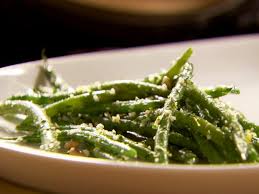
1 pound French green beans, trimmed
2 teaspoons minced garlic (2 cloves)
1 tablespoon grated lemon zest (2 lemons)
3 tablespoons minced fresh flat-leaf parsley
3 tablespoons freshly grated Parmesan cheese
2 tablespoons toasted pine nuts
2 1/2 tablespoons good olive oil
Kosher salt and freshly ground black pepper

Bring a large pot of water to a boil. Add the green beans and blanch them for 2 to 3 minutes, until tender but still crisp. Drain the beans in a colander and immediately put them into a bowl of ice water to stop the cooking and preserve their bright green color.

For the gremolata, toss the garlic, lemon zest, parsley, parmesan, and pine nuts in a small bowl and set aside.

When ready to serve, heat the olive oil in a large saute pan over medium-high heat. Drain the beans and pat them dry. Add the beans to the pan and saute, turning frequently, for 2 minutes, until coated with olive oil and heated through. Off the heat, add the gremolata and toss well. Sprinkle with 3/4 teaspoon salt and 1/4 teaspoon pepper and serve hot.

Jumbo Lump Crab Cake Bites

web-jumbo-lump-crab-bites-5902
16 ounce container fresh jumbo lump crab meat
1 large egg
½ cup regular mayonnaise
½ cup Italian bread crumbs
1 teaspoon Old Bay Seasoning
⅛ teaspoon fines herbs
⅛ teaspoon garlic powder
½ teaspoon dijon mustard
1 teaspoon Worcestershire sauce
1-2 tablespoons unsalted butter
optional: dijon mustard for serving

Set the oven to broil and place the oven rack near the top.
In a medium sized bowl, gently pick through the crab meat to remove any shells. Try not to break up the lumps.
In a separate bowl, beat the egg and then whisk in the mayonnaise until well combined.
Add the breadcrumbs, Old Bay, fines herbs, garlic powder, mustard and Worcestershire sauce, stirring until well combined.

A little bit at a time, gently fold the wet mixture into the crab meat. This part takes some patience because you really want to avoid breaking up the lump meat.

Using a kitchen scale, weigh out 1 ounce bites and gently shape them with your hands.
Lightly grease the bottom of a baking sheet (baking spray works well) and place the crab cake bites on the sheet.
Place a small piece of butter on top of each crab cake bite.

Broil for 7-10 minutes, keeping a close eye to make sure they don’t burn. Allow them to cook on one side the entire time (the lack of filler makes them very delicate). If the tops seem like they’re going to burn, lower the oven rack or switch the broiler to a lower setting. You’re not cooking the meat but you want the filling to solidify and the egg to cook through.

When the tops are golden brown, remove the pan from the oven and allow to cool. Place a toothpick in each crab cake bite before serving.  approximately 21 bites

Guasacaca sauce from Margaret L

1 onion, peeled, base removed and cut into eighths
1 ripe avocado, peeled and pitted
2-3 tablespoons of white or rice wine vinegar
2-3 cloves of garlic
1 jalapeño pepper, seeded and cored
1 bunch flat leaf parsley, washed and mostly dried
1 bunch cilantro, washed and mostly dried
salt to taste
3 tbsp vegetable oil

Place the onion, avocado, vinegar, garlic, and jalapeño in a blender (or food processor)
and purée until smooth. Add the parsley and cilantro and purée until smooth. If it is too
dry and won’t blend, add a little vinegar.
Add salt to taste and then add the oil last.

Use on meat, fish, poultry, refritos or even bread. I found it as an accompaniment to Venezuelan arepas. Freeze excess. Margaret L

Pierpoint Restaurant Maryland Crab Cakes

435568_640x360
1 lb. of jumbo crab meat
1 lb. of sweet crab claw meat
30 butter style crackers, crushed into crumbs
2 Tbsps. Dijon mustard
1 Tbsp. Worcestershire sauce
2 tsps. parsley
1 cup mayonnaise
juice from ½ of one lemon
1 tsp. dry mustard
2 eggs
1 Tbsp. Old Bay seasonong
1 Tbsp. melted, salted butter

1. Clean crabmeat and set aside.
2. Combine all of the remaining ingredients in the order listed and mix thoroughly.
3. Add crab meat and gently fold in so as not to break the lumps.
4. Portion out into 8 crab cakes of equal proportion.
5. Can be cooked either of two ways:
6. Broil in a heated broiler in a shallow baking dish with a small amount of water for about 10 minutes, careful not to burn.
7. Or saute in vegetable oil until golden brown on all sides.

Tartar Sauce:
1 cup mayonnaise
1/3 cup small capers
1/3 cup roasted peppers, diced fine
1 tsp. lemon juice
Chop capers and peppers and mix well in a bowl with lemon.

Bulgogi Style Tofu, Allyson Kramer

BULGOGI-vegan-gluten-free-1
One 16 oz block extra firm, very dense tofu (see recommended brand below)
4 green onions, chopped (use white part too!)
3 cloves garlic, minced
1/2 average sized onion, sliced
1 heaping tsp fresh grated ginger
2/3 cup wheat free tamari or soy sauce
4 tbsp toasted sesame oil
6 tbsp organic sugar
1 tsp black pepper
1 tsp crushed red pepper flakes
4 tbsp mirin
2 tbsp rice vinegar
1/4 cup shredded pear, skin and all

First, make sure your tofu is very well drained. Wrap it up in towels and press between two plates with something heavy on top to get all that water out. I pressed mine for well over an hour. A Tofu Xpress would work great here. I also used the brand of tofu shown below (found at Whole Foods)… which is super dense and just perfect for this recipe. If you can’t find this particular brand, just try and get the densest brick of tofu you can find, as the density makes it easier to slice very thinly. Freezing the tofu after draining is also an option if you’re working with a flimsier tofu.

http://www.allysonkramer.com/2011/02/bulgogi-style-tofu/