Cold Noodles with Miso, Lime and Ginger from http://smittenkitchen.com/

Adapted, just a bit, from David Tanis

cold soup


Noodles and vegetables
8 ounces buckwheat noodles
A mixture of raw vegetables of your choice (such as carrots, cucumbers, radishes or daikon; see Note for more suggestions)


Sauce
2 to 3 tablespoons miso (red is recommend; white would be just fine)
1 2-inch piece ginger, finely grated
2 teaspoons granulated sugar
1/8 teaspoon ground cayenne, or to taste
2 tablespoons mirin
1 tablespoon soy sauce
2 tablespoons lime juice (from about 1 lime), plus lime wedges for serving

 Cook the noodles in well-salted water until tender but firm for the time recommended on your package of noodles. What, your package is only in Japanese, like mine? Most are cooked between 5 and 8 minutes, so test at 5 and add more minutes if needed.

Meanwhile, grate, julienne or thinly slice vegetables of your choice.

Drain noodles and run cold water over them to cool. Drain again, shaking out excess water.

Make the dressing by whisking the smaller amount of miso plus the remaining sauce ingredients in a bowl. Taste and adjust to make sweeter (with more sugar) or more intense and salty (with the last tablespoon of miso) if desired.

Divide noodles among four bowls; toss each with a tablespoon of the sauce, plus more to taste. Top with vegetables and extra droplets of sauce. Serve with lime wedges.

Notes:

  • Mirin is a rice wine, similar to sake but lower in alcohol and much more sweet. If you can’t find it or don’t wish to buy it (a bottle of the basic stuff is usually around or just under $5), you might try using sake, or a mixture of rice vinegar, sugar and white wine or just water, I’d say 1 tablespoon of each liquid plus 1/2 teaspoon sugar to replace the 2 tablespoons of mirin recommended below.
  • If you have access to an Asian grocery store (New Yorkers, I use the M2M shops often), see if you can find 100 percent buckwheat soba noodles (which would also be gluten-free); they’re inexpensive and wonderful here. Mine had a mix of buckwheat and wheat flour, which is more common. If you cannot find them, you can use rice noodles or even spaghetti in a pinch. Here’s a good read on different Asian noodles.
  • Use whichever medley of cold, crunchy vegetables you’d like here; Tanis recommends daikon (a long, white mild radish), cucumber, radishes, radish sprouts and shiso leaves; I cleaned out my produce drawer with some julienned carrots, thinly sliced string beans, radishes, cucumbers and some wasabi micro-greens I couldn’t resist at the Greenmarket. Tanis suggests soaking grated daikon in the sauce, which I have no doubt mellows it, but I wanted to keep things simpler here.
  • I should forewarn that 3 tablespoons of red miso (a saltier, more intenseversion of white miso; you can use white miso here too if you don’t have red) will make a very salty sauce. We liked it, but we also used just a little per bowl. You can use the full amount and go easy on the sauce as we did, bump up the sugar, or you can start with less of the miso and only add more to taste. I’m recommending the latter above.
  • Serves 4 as a light meal or appetizer; for bigger appetites, you might want to double this


Marinated Seared Tuna from Anne Burell


LR0802H_marinated-seared-tuna_s4x3.jpg.rend.sni12col.landscape

1/2 cup soy sauce
1/4 to 1/2 cup rice wine vinegar

2 teaspoons sambal oelek
4 scallions, white and light green sliced and finely chopped, dark green sliced on an extreme bias for garnish
2 cloves garlic, smashed and finely chopped
1 1/2 inches ginger, peeled and grated
Four 6-ounce sushi-grade tuna steaks, preferably in logs about 2 by 2 by 4 inches
Peanut oil, for searing

In a flat, shallow dish, combine the soy, rice vinegar, sambal, white and light green scallions, garlic and ginger. Add the tuna and roll around to get the marinade on all sides. Cover and let sit in the fridge for up to 2 hours, turning the tuna periodically.

Remove the tuna from the fridge and let sit in the marinade outside of the fridge for 20 to 30 minutes.

When the tuna has come to room temperature, remove it from the marinade. With a paper towel, gently remove some of the excess marinade.

Coat a large saute pan with peanut oil and bring it to a VERY high heat. When the pan is VERY hot but not quite smoking, pull the pan off the heat and add the tuna to the pan. Return the pan to the heat and sear the tuna for 1 minute on each side.

Remove the tuna from the pan, let rest for 4 to 5 minutes and slice into 1/4 to 1/2-inch thick slices. Sprinkle with the dark green sliced scallion tops.

Serve immediately with a little extra soy on the side if desired.


okonomiyaki from food52.com


  • Food52
    Sauce
    1/2 cup mayonnaise
    2 tablespoons soy sauce
    2 teaspoons sriracha, more or less to taste
    Pancakes
    5 large eggs
    1 teaspoon soy sauce
    1 teaspoon sesame oil
    1 teaspoon sea salt
    1/3 cup AP flour
    2 cups cabbage, shredded with a mandoline or finely chopped
    1 bunch scallions, trimmed and chopped
    3/4 cups (roughly) baby or chopped shrimp
    canola oil for frying
    1-2 tablespoon toasted sesame seed
    bonito flakes (optional)
  • Whisk the first set of ingredients together and voila, your sauce. Set aside while you make the pancakes.
  • In a large mixing bowl, whisk eggs with the soy sauce, sesame oil, and salt. Gradually add the flour until incorporated. Fold in cabbage, scallions, and shrimp.
  • Warm a couple glugs of canola oil in a skillet over medium-high heat until glistening. Ladle the batter into the skillet as you would for regular old pancakes. I usually make them about the size of saucer. Cook on each side for about 3 minutes or until golden brown. Keep pancakes covered in a warm oven as you make the rest. Scatter sesame seeds and/or bonito flakes on top of pancakes and serve with dipping sauce and a cold pilsner.  Makes roughly a dozen pancakes depending on their size

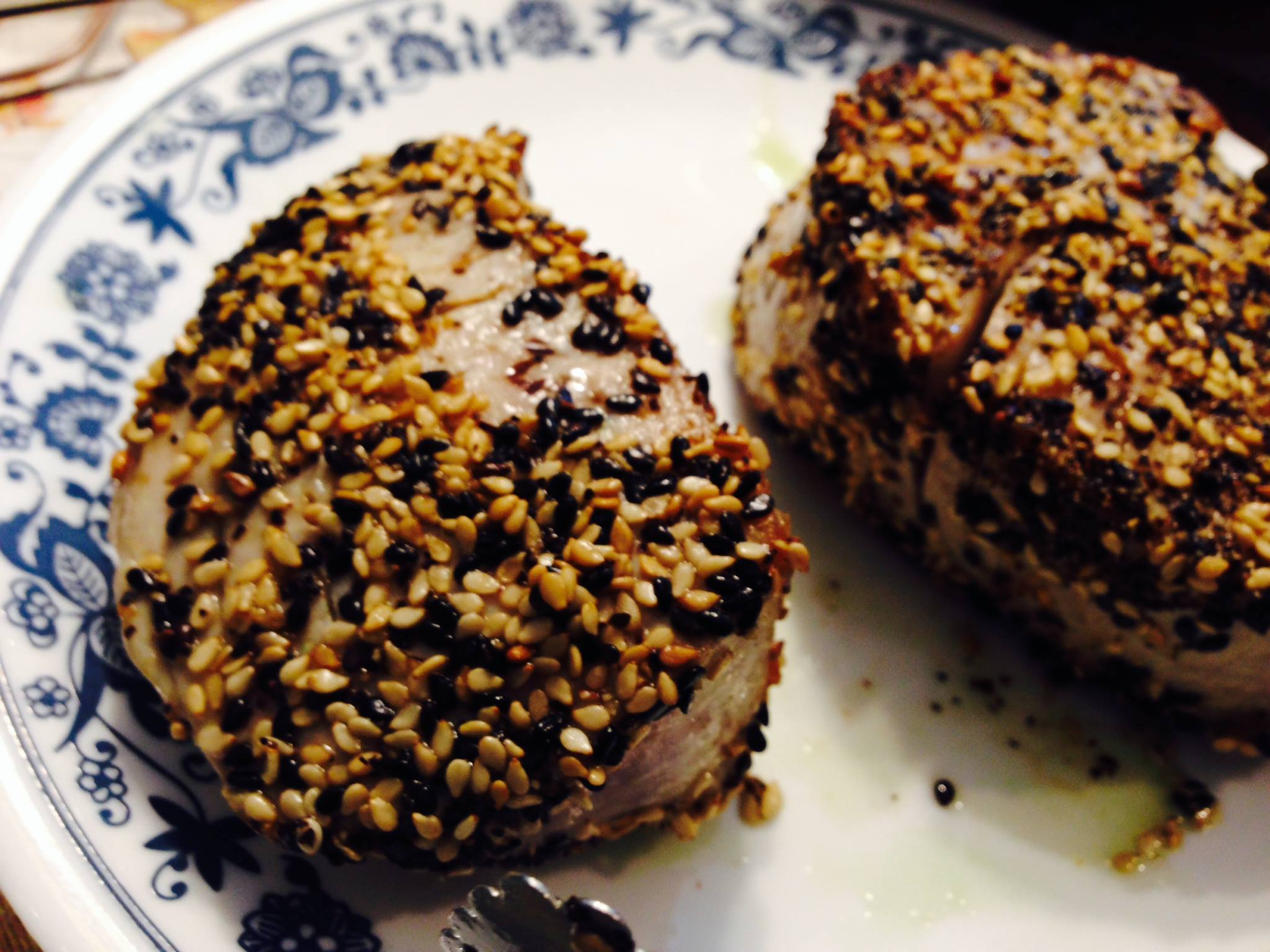
pan seared ahi tuna crusted

tuna 1marinade
1 tbsp sesame oil
2 tbsp soy sauce
2 tbsp ginger garlic paste
mix together in zip lock bag
add tuna and marinate 1-24 hours, turn several times
tuna

Season tuna with salt and pepper. Roll in sesame seed and pat seeds to tuna . Put grape seed oil in cast iron pan and heat to a high temp, add tuna, cook for 2 minutes on each side and ends. Turn off heat and let tuna sit in pan for 2-3 minutes.

Serve with wasabi sauce. Mix Cream or mayo with wasabi add fish sauce, maple syrup, sambal and soy sauce.