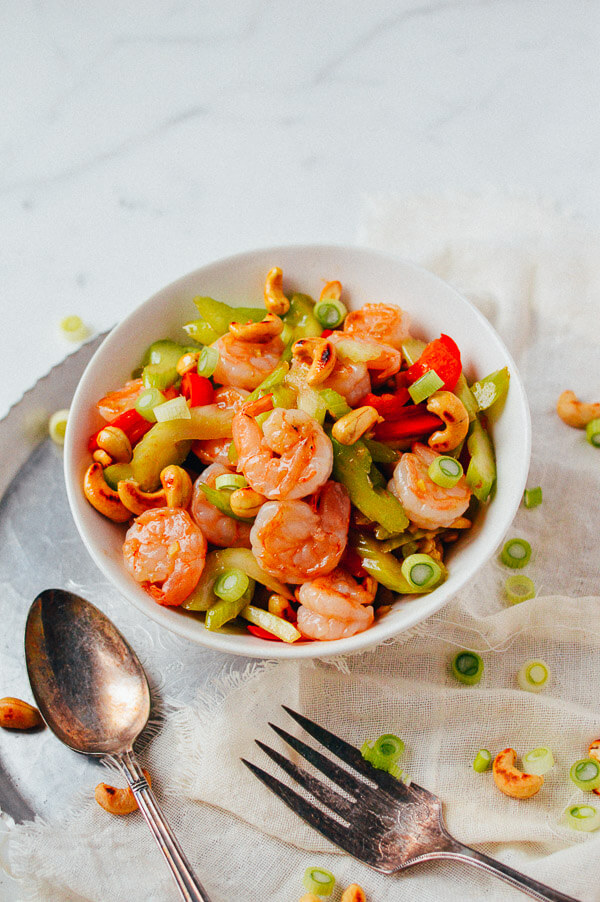
Cashew Shrimp Stir-fry from thewoksoflife.com/

shrimp-cashews-8
8 oz. medium shrimp, peeled and deveined
1 1/4 teaspoon sugar, divided
1/8 teaspoon baking soda
1/4 cup water
1/2 teaspoon sesame oil
1 teaspoon cornstarch
salt and white pepper
4 stalks celery, sliced at a 45 degree angle
1/2 of a red bell pepper, sliced
1 1/2 tablespoons oil
2 slices ginger, minced
1 scallion, chopped
2 teaspoons oyster sauce
3/4 cup roasted cashews

First, prepare the shrimp. Toss the shrimp with 1 teaspoon sugar, baking soda, and 1/4 cup water, gently mixing everything together for a couple minutes. Cover and refrigerate for 2 hours and then rinse under cold running water for 5 minutes to wash away any sugar and baking soda. Pat the shrimp dry thoroughly with a paper towel. Marinate the shrimp with 1/2 teaspoon sesame oil, 1 teaspoon cornstarch, 1/4 teaspoon salt and pinch of white pepper and set aside while you prepare the rest of the ingredients.

Now, since the dish comes together very quickly, and you want to avoid overcooking the shrimp, it’s time to blanch the celery and red bell pepper. Bring a pot of water to a boil and drop the celery and red bell pepper in. After 30 seconds, drain the vegetables and shock them in ice water. Drain completely and set aside.

Heat 1 1/2 tablespoons oil in a wok over medium heat. Add the minced ginger and chopped scallion and cook for 1 minute. Then turn up the heat to high and add the shrimp. Once the shrimp have just begun to turn pink, add the blanched celery and red bell pepper, along with the last 1/4 teaspoon sugar, the oyster sauce, and the cashews. Mix everything well, and season to taste with salt and white pepper. Serve.

Note: It’s ideal to use roasted cashews for this recipe, but I only had raw cashews, so I just wok-roasted them for about 10 minutes. I’ve learned that cashews burn easily, so when roasting, start with a cold wok and medium low heat. Add 1 tablespoon oil and then the cashews. Toast the cashews for about 10 minutes, stirring often and taking care not to burn them. Then spread them out and let cool until they’re ready to go into the dish.

Lucky Peach’s Odd Flavor Sauce

eb57a190-112f-452b-af95-f116ca56edf3--2015-0929_odd-flavor-sauce_james-ransom-015

  • tablespoons soy sauce
  • tablespoons tahini, almond butter, or peanut butter
  • tablespoon Chinkiang vinegar (Chinese black rice vinegar) or red wine vinegar
  • tablespoon sesame oil
  • teaspoons sugar
  • teaspoons kosher salt
  • tablespoons neutral oil (like canola, vegetable, or grapeseed)
  • small scallion, finely chopped (about 1 tablespoon)
  • tablespoon minced fresh ginger
  • large garlic clove, finely chopped (about 1 tablespoon)
  • 1/2 teaspoon chili flakes (or more to taste)
  • 1/2 teaspoon crushed Sichuan peppercorns
  1. Combine the soy sauce, tahini (or nut butter), vinegar, sesame oil, sugar, and salt in a small heatproof bowl and mix until the sugar is dissolved and tahini is well incorporated. It’s okay if it’s not completely dissolved, though.
  2. Heat a small skillet over medium heat, add the oil, and heat until shimmering. Add the scallions, ginger, garlic, chili flakes, and crushed peppercorns. Remove from the heat and stir for 10 seconds, until the scallion is bright green and everything’s aromatic. Pour all this into the liquid seasonings and whisk until well blended. Once cool, the sauce will keep in the fridge for one or two days.  Makes about 1/2 cup

Author Notes: Serve the sauce with chicken, fish, pork, or tofu—and always some rice. Really, just put it on whatever needs a little extra “oomph,” like soba noodles or roasted or steamed vegetables. It would also work as a stellar sauce for okonomiyaki

salmon bibimbap from http://thewoksoflife.com/

salmon-bibimbap-10

2 cups raw white rice
light olive oil or canola oil
2 carrots, julienned
Salt and pepper
2 cups bean sprouts
2 bunches watercress
4 cloves garlic, minced
1 tablespoon soy sauce
1 teaspoon toasted sesame seeds
½ teaspoon sesame oil
1 salmon steak or filet
4 eggs, cooked sunny side up (over easy is fine too)
1 cup kimchi
Roasted seaweed flakes or sheets, cut into slivers (optional)
Gochujang paste, to taste (about 1-2 tablespoons per serving)

First, cook 2 cups of dry rice using your preferred method.

Next, heat a pan with 1 tablespoon of oil over medium-high heat. Stir-fry the carrots for about 1 minute, sprinkling with a pinch of salt. Transfer to a bowl and set aside.

Next, stir fry the bean sprouts using the same method as with the carrots.

Next prep your watercress. Cut each bunch in half and wash thoroughly.

In the same pan you used for the carrots, heat 2 tablespoons of oil over medium high heat. Add the garlic and let fry gently for about 15-20 seconds. Add the watercress, followed by a ½ teaspoon of salt, and stir-fry until completely wilted. Remove from the heat and toss with the soy sauce, sesame seeds, and sesame oil. Set aside.

Now for the salmon. Sprinkle with salt and pepper on both sides. Heat a pan over medium high heat with 3 tablespoons of oil. Add the salmon. Let brown for about 5 minutes. Flip, and let the other side cook for another 5 minutes. Our salmon steak was pretty thick, so cooking time may need to be adjusted depending on how big your piece of salmon is. When in doubt, just use a knife to gently cut into the center to check for doneness. Looks don’t matter with this dish, as we’ll be flaking the salmon anyway.

While the salmon is cooking, set aside the kimchi and seaweed flakes, cutting up the seaweed with kitchen shears if you’re using roasted sheets. Also, cook one egg for each person you’re serving.

When the salmon is finished cooking, you’re ready to assemble your bibimbap.

Spoon a nice bed of rice into a bowl and top with a small handful of flaked salmon and your egg. Add as much watercress, carrot, bean sprouts, kimchi, and seaweed as your heart desires. Finish off with gochujang to taste. Stir thoroughly and enjoy with a big spoon!

Shrimp With Thai Basil from Chinatown Kitchen: From Noodles to Nuoc Cham.


  • 112 tablespoons fish sauce
  • 1 tablespoon oyster sauce
  • 1 teaspoon sugar
  • Pinch ground white pepper
  • 4 tablespoons water
  • 1 tablespoon vegetable oil or peanut oil
  • 8 cloves garlic, minced
  • 1 large green or red chili pepper, stemmed, seeded and cut crosswise into thick rings
  • 1 small white onion, cut into thin half-moons
  • 1/2 cup packed sugar snap peas or snow peas, cut in half
  • 10 peeled and deveined jumbo shrimp
  • 2 small ripe tomatoes, cut into quarters
  • Small handful Thai basil leaves (see headnote; may substitute a hefty handful of Genovese basil)
  • Juice from 1/2 lime, for serving

Whisk together the fish sauce, oyster sauce, sugar, white pepper and 1 tablespoon of the water in a liquid measuring cup.

Heat the oil in a wok over medium heat. Once the oil shimmers, swirl to coat, then add the garlic. Stir-fry gently for 3 to 4 minutes, then add the chili pepper and stir to combine. Stir in the onion; increase the heat to high and stir-fry for 1 minute, until the peppers have softened a bit, making sure the garlic doesn’t burn.

Add the sugar snap peas or snow peas and the remaining 3 tablespoons of water; stir-fry until the water has evaporated. Add the shrimp; stir-fry for 1 minute, then add the fish sauce mixture, the tomatoes and basil; stir-fry, shaking the wok once or twice, just until the shrimp have become opaque and the tomatoes have barely wilted.

Remove from the heat; add the lime juice.  Serve right away. 2 servings


15-Minute Coconut Curry Noodle Soup from thewoksoflife.com/

coconut-curry-noodle-soup-102 tablespoons oil
3 garlic cloves, chopped
1 tablespoon fresh ginger, grated
3 tablespoons Thai red curry paste
8 oz. boneless chicken breast or thighs, sliced OMIT
4 cups veggie broth
1 cup water
2 tablespoons fish sauce
2/3 cup coconut milk
6 oz. dried rice vermicelli noodles
1 lime, juiced
Sliced red onion, red chilis, cilantro, scallions to garnish

In a large pot over medium heat, add the oil, garlic, ginger, and Thai red curry paste. Fry for 5 minutes, until fragrant. Add the chicken and cook for a couple minutes, just until the chicken turns opaque.

Add the chicken broth, water, fish sauce, and coconut milk. Bring to a boil. At this point, taste the broth for salt and adjust seasoning accordingly (add salt if needed, or if it’s too salty, add a bit of water). Pour the boiling soup over the dried vermicelli noodles in your serving bowls, add a squeeze of lime juice and your garnishes, and serve. The noodles will be ready to eat in a couple minutes.

(Alternatively, you can add the noodles to the boiling broth to cook them, and then divide among serving bowls).


Vegetable Noodles With Shrimp from thewoksoflife.com

glass-noodles-shrimp-9
1 tablespoon oil
1 small onion, diced
3 cloves garlic, minced
¼ cup dried shrimp, soaked (optional)
1 teaspoon Shaoxing wine
2 cups veggie stock
1 teaspoon salt
½ teaspoon sugar
8 oz. dried broad bean noodles, soaked 30 minutes
1 medium zucchini, sliced into noodles
1 large carrot, sliced into noodles
2 teaspoons soy sauce
½ teaspoon sesame oil
1/8 teaspoon white pepper
12 oz. large shrimp, peeled and deveined
1 scallion julienned
Cilantro, to garnish (optional)

Prep all of your ingredients and have them ready before you start cooking. Heat a wok over medium high heat and add the oil, onion, garlic, and dried shrimp. Stir-fry until the onion is translucent. Add the shaoxing wine and stir-fry for another 30 seconds. Add the chicken stock, salt, sugar and broad bean noodles. Turn down heat to low and let everything simmer for about 10 minutes.

Add the zucchini and carrot “noodles,” along with the soy sauce, sesame oil and white pepper. Turn the heat up to medium and cook for another 5 to 10 minutes, reducing almost all of the liquid. If you like your noodles a bit more soupy, you can add more chicken stock.

Stir in the shrimp and scallions and cook for another 2 minutes, or until the shrimp is just cooked through. Garnish with cilantro and serve!  Yield: 2-4 servings


Shiitake Mushroom Tortellini w/ Soy Cream Sauce from thewoksoflife.com

mushroom-tortellini-11

  • Olive oil
  • 6 oz. fresh shiitake mushrooms, finely chopped
  • 1/3 cup minced scallion
  • 1/2 teaspoon crushed red pepper flake
  • ½ cup Parmesan cheese
  • 1 cup ricotta cheese
  • 1 egg
  • salt and pepper to taste
  • 36-42 square wonton wrappers (1 pack should be enough)
  • ½ cup panko breadcrumbs
  • 3 cloves garlic, sliced
  • 2/3 cup milk
  • ½ cup heavy cream
  • 2 teaspoons soy sauce
  • 1 teaspoon dark soy sauce

In a skillet over medium high heat, add a few good lugs of olive oil. Add the mushrooms and season with salt. Sauté the mushrooms until tender and caramelized. This could take a while, so don’t rush the process! Once the mushrooms are caramelized, you might have some sticky bits at the bottom of the pan. Deglaze with a bit of water.

Transfer the cooked mushrooms to a mixing bowl and add the scallion, crushed red pepper flake, Parmesan, ricotta cheese, egg, and salt and pepper to taste.

To assemble, use a bit of water to dampen the edges of each wonton wrapper, and add a teaspoon of filling to the middle.

Fold in half diagonally so you get a triangle. Make sure there aren’t any air bubbles in the middle, and that the edges are tightly sealed.

Bring the two farthest corners of the triangle together to make a pseudo “tortellini” shape. Continue assembling until you’ve run out of filling.

Bring a pot of water to a boil for the tortellini. In a skillet over medium heat, add a couple tablespoons of olive oil. Add the panko and stir constantly until golden. Remove from the pan and set aside.

Add a couple tablespoons more oil to the skillet and add the garlic. Cook for 1 minute. Add the milk and cream, and bring to a simmer. Cook for 2 minutes and add the soy sauces. Season with pepper.

By now, the water for the ravioli should be boiling. Cook the ravioli in the boiling water for 20 seconds. With a slotted spoon, transfer the ravioli to the sauce and simmer for another 60-90 seconds.

Serve immediately, garnished with your panko pangrittata and more scallions.


How to Make Vegetarian Phở Without a Recipe from food52

1Phở is a soup you stick your face in before you eat. You can’t help but smell it: mellow onion, all those spices, zesty lime, and hits from just-relaxed herbs all steaming up together. It simultaneo usly nestles you underneath your blankets and ships you to the street markets of Hanoi.

Having so many flavors at work in one soup means you have a lot to tinker with. First, there’s the broth: Classically, it’s beef- or chicken-based, but you can get an equally robust (and vegan) broth by taking some traditional broth ingredients, which you likely already have in your pantry, to the oven or stove beforehand. Plus, by using your nose, you can adjust the spice components of your broth before it gets to simmering, so you know you’ll like the final flavor. And we hope you really like it, because this broth is something to have on hand for the week, to carry whatever miscellaneous vegetables need using up.

In addition to the wide array of vegetables that fit into this soup, there are noodles, proteins, and umpteen garnishes to dabble in. Stir in as many or as few as you want, or let each person choose their own (a phở bar!). A few slurps, with all the textures of the mix-ins and that anchor of abroth, and you’ll feel good, fortified. Here’s how to do it:

1. Scorch. Cut an onion and 2 pieces of ginger in half; the peel can stay on. Using tongs, place the pieces of onion and ginger directly over the flame of your gas stove, one by one. Hold them there for 3 to 4 minutes, turning every so often so all the sides get black. It might look as if you’re making onion s’mores (which sound horrible) — but there’s a good reason you’re going there: Charring the aromatics gives them a smokiness and a nice, mellow sweetness.

If this indoor campfire sounds treacherous, you could also broil the onion and ginger in the oven for 3 to 4 minutes on each side. You could also skip the charring step entirely and proceed to step two using chopped raw onion and ginger, though the broth won’t end up quite as sweet and soothing.

2. Make the broth. Put the onion and ginger in a soup pot with 6 or so cups of water. Next come the spices. Measure a cupped palmful (or a tablespoon) each of fennel seeds, coriander seeds, and peppercorns, and add them to a little bowl. Throw in a few cardamom pods, star anise, cloves, and cinnamon sticks. Smell the mixture: Do you like how it smells? Do you want to eat a soup that tastes like that? Into the soup pot they go. Are you not getting enough fennel, or do you want more of another spice? Add a bit more, smell to make sure it smells like what you want, then add the spices to the pot. Throw in a pinch of salt.

3. Simmer. Bring the mixture to a boil, and let it simmer, covered, for an hour.

4. While you wait, prep your mix-ins. They may be a combination of:

  • Noodles: cooked rice noodles or soba (cook your noodles beforehand — cooking them in the broth will make the broth murky and starchy)
  • Chopped raw vegetables: bok choy, kale, spinach, broccoli, asparagus, mung bean sprouts, mushrooms, snap peas, or whatever you have lying around
  • Protein: tofu, shelled edamame, or — for the non-vegetarian route — cooked chicken or turkey or very thinly sliced raw beef
  • Garnish: lime, cilantro, basil, mint, Sriracha, soy sauce, hoisin sauce, green onions, or crispy fried shallots

As you bide the time while your soup cooks, entertain yourself with some phonomenal puns: Pho is a phobulous, unphogettable Vietnamese soup — pho real, it should be a phonomenon. Pho pho the win. Pho phoever. It’s pho sho what’s pho dinner. (Except really it’s pronounced “fah,” not “fo,” so you can phoget about this phonny business.)

5. Get ready to slurp. Your broth will be ready when you taste it and you like it. If the flavor isn’t intense enough, let it simmer for a little longer. If the spices are overwhelming, add a bit more water. Then, strain the broth and discard the solids. Ladle into and add as many or as few of your mix-ins as you’d like. Let the raw ones (everything but the noodles) soften a bit from the heat of the broth. Take a whiff. It’s good, right?2

Shrimp Fried Rice w/ Thai Basil from woks of life

shrimp-fried-rice-152 cups broccoli florets
4 tablespoons oil, divided
8 oz. shrimp, peeled and deveined
1 onion, thinly sliced
4 cups cooked rice, cool and loosen
1 tablespoon fish sauce
1 tablespoon of shaoxing wine
1 tablespoon sesame oil
1 tablespoon light soy sauce
1 teaspoon dark soy sauce
½ teaspoon salt
1/4 teaspoon grounded white pepper
3 eggs, beaten
1 cup roughly chopped Thai basil

Bring a pot of salted water to a boil. Blanch broccoli for 30 seconds and drain, rinsing under cold water to stop the cooking process.

Heat your wok over high heat until smoking slightly and add 2 tablespoons oil. Cook the shrimp, making sure to get a good sear, until just barely cooked through. Remove from the wok and set aside.

With the heat still on high, add another 2 tablespoons of oil and add the onion. Stir-fry for 2 minutes, until softened. Add the cooked rice to the wok, and mix, breaking up any large clumps of rice in the process. Add the fish sauce, shaoxing wine, sesame oil, soy sauces, salt and white pepper. Give everything a good stir.

Add the egg to the rice and stir rapidly, so that the egg cooks and forms a kind of glaze over each grain of rice. Add the broccoli and shrimp back to the pan, along with the Thai basil. Give everything a final stir for another minute or two, and serve. Yield: 4 servings

Steamed Shrimp with Glass Noodles – Two Ways from the woks of life

steamed-shrimp-noodles
For the garlic version:
12 oz. shrimp, cleaned
1 bundle of glass noodles
1 tablespoon minced or grated garlic
1/4 cup water, plus more, to soak the garlic
1/4 teaspoon sugar
2 tablespoons light soy
1/2 tablespoon Shaoxing wine
For the cilantro and green chili version:
12 oz. shrimp, cleaned
1 bundle of glass noodles
1 tablespoon minced green chilies
1/4 teaspoon salt
1 tablespoon cilantro, finely chopped
1/4 teaspoon sugar
1/4 cup water
1 1/2 tablespoons light soy
1/2 tablespoon Shaoxing wine

Split the shrimp in half to the tail, leaving the tail whole. Soak the glass noodles in warm water for 20 minutes and drain.

For the garlic version, put the minced garlic into a bowl of hot water for a minute and strain. This takes some of the edge off of the garlic, and makes it sweeter once steamed. Combine the strained garlic with another 1/4 cup fresh water, sugar, light soy, and shaoxing wine.

For the cilantro green chili version, pound the minced green chilies and 1/4 teaspoon salt together in a mortar and pestle. Set aside for 30 minutes. Then mix in the cilantro, sugar, water, light soy, and shaoxing wine.

Spread out the glass noodles in two shallow, heat-safe bowls. Fan out equal amounts of shrimp on each plate. Spoon the prepared sauces evenly over each of the shrimp dishes.

Boil water in a steamer with a steamer rack and place the dishes inside. Cover immediately and steam for about 5 minutes. Remove from heat. The shrimp should be opaque and but not over-cooked. Keep a close eye on it, and adjust the steaming time according to the size of your shrimp.

Once you take the shrimp out, spoon the liquid over the shrimp and serve immediately.